Khóa học
IELTS Online
IELTS Online
Giảm đến 18%
Đăng ký ngay
Mục lục [Ẩn]
Khi luyện thi IELTS Reading, việc thực hành với đề thi thật là phương pháp hiệu quả giúp bạn cải thiện kỹ năng và nâng cao band điểm nhanh chóng. Trong bài viết này, bạn sẽ được hướng dẫn giải chi tiết đề thi IELTS Reading “The Voynich Manuscript”, bao gồm đề bài, câu hỏi, đáp án chuẩn kèm phần giải thích rõ ràng. Đây là nguồn tài liệu luyện thi chất lượng, giúp bạn hiểu sâu cách ra đề, nắm vững chiến lược làm bài và tự tin hơn khi bước vào kỳ thi thật.
The Voynich Manuscript
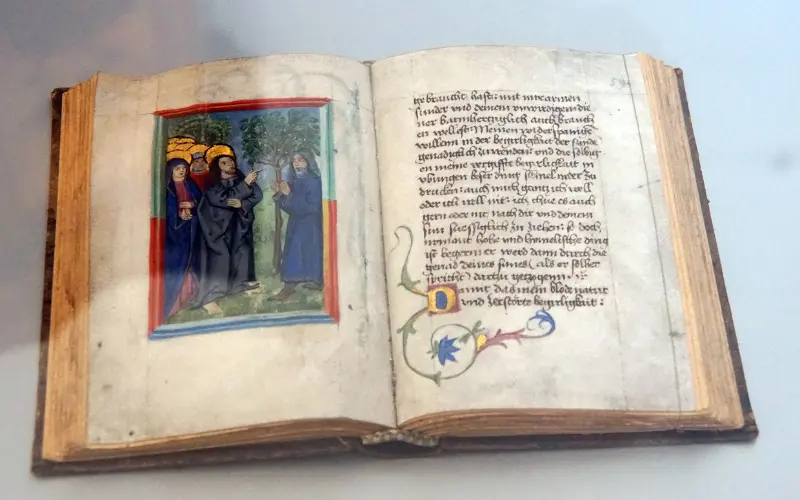
The starkly modern Beinecke Library at Yale University is home to some of the most valuable books in the world: first folios of Shakespeare, Gutenberg Bibles and manuscripts from the early Middle Ages. Yet the library’s most controversial possession is an unprepossessing vellum manuscript about the size of a hardback book, containing 240- odd pages of drawings and text of unknown age and authorship. Catalogued as MS408, the manuscript would attract little attention were it not for the fact that the drawings hint at esoteric knowledge, while the text seems to be some sort of code – one that no-one has been able to break. It’s known to scholars as the Voynich manuscript, after the American book dealer Wilfrid Voynich, who bought the manuscript from a Jesuit college in Italy in 1912.
Over the years, the manuscript has attracted the attention of everyone from amateur dabblers to top codebreakers, all determined to succeed where countless others have failed. Academic research papers, books and websites are devoted to making sense of the contents of the manuscript, which are freely available to all. ‘Most other mysteries involve second-hand reports,’ says Dr Gordon Rugg of Keele University, a leading Voynich expert. ‘But this is one that you can see for yourself.
It is certainly strange: page after page of drawings of weird plants, astrological symbolism and human figures, accompanied by a script that looks like some form of shorthand. What does it say and what are the drawings about? Voynich himself believed that the manuscript was the work of the 13th-century English monk Roger Bacon, famed for his knowledge of alchemy, philosophy and science. In 1921 Voynich’s view that Bacon was the writer appeared to win support from the work of William Newbold, Professor of Philosophy at the University of Pennsylvania, who claimed to have found the key to the cipher system used by Bacon. According to Newbold, the manuscript proved that Bacon had access to a microscope centuries before they were supposedly first invented. The claim that this medieval monk had observed living cells created a sensation. It soon became clear, however, that Newbold had fallen victim to wishful thinking. Other scholars showed that his ‘decoding’ methods produced a host of possible interpretations. The Voynich manuscript has continued to defy the efforts of world-class experts. In 1944, a team was assembled to tackle the mystery, led by William Friedman, the renowned American codebreaker. They began with the most basic codebreaking task: analysing the relative frequencies of the characters making up the text, looking for signs of an underlying structure. Yet Friedman’s team soon found themselves in deep water. The precise size of the ‘alphabet’ of the Voynich manuscript was unclear: it’s possible to make out more than 70 distinct symbols among the 170,000-character text. Furthermore, Friedman discovered that some words and phrases appeared more often than expected in a standard language, casting doubt on claims that the manuscript concealed a real language, as encryption typically reduces word frequencies.
Friedman concluded that the most plausible resolution of this paradox was that ‘Voynichese’ is some sort of specially created artificial language, whose words are devised from concepts, rather than linguistics. So could the Voynich manuscript be the earliest- known example of artificial language? ‘Friedman’s hypothesis commands respect because of the lifetime of cryptanalytical expertise he brought to bear,’ says Rob Churchill, co-author of The Voynich Manuscript. That still leaves a host of questions unanswered, however, such as the identity of the author and the meaning of the bizarre drawings. ‘It does little to advance our understanding of the manuscript as a whole,’ says Churchill. Even though Friedman was working more than 60 years ago, he suspected that major insights would come from using the device that had already transformed codebreaking: the computer, hi this he was right – it is now the key tool for uncovering clues manuscript’s language.
The insights so far have been perplexing. For example, in 2001 another leading Voynich scholar. Dr Gabriel Landini of Birmingham University in the UK, published the results of his study of the manuscript using a pattern-detecting method called spectral analysis. This revealed evidence that the manuscript contains genuine words, rather than random nonsense, consistent with the existence of some underlying natural language. Yet the following year, Voynich expert René Zandbergen of the European Space Agency in Darmstadt, Germany showed that the entropy of the text (a measure of the rate of transfer of information) was consistent with language had been used.
Many are convinced that the Voynich manuscript isn’t a hoax. For how could a medieval hoaxer create so many telltale signs of a message from random nonsense? Yet even this has been challenged in new research by Rugg.
Using a system, first published by the Italian mathematician Girolamo Cardano in 1150, in which a specially constructed grille is used to pick out symbols from a table, Rugg found he could rapidly generate text with many of the basic traits of the Voynich manuscript. Publishing his results in 2004, Rugg stresses that he hadn’t set out to prove the manuscript a hoax. T simply demonstrated that it’s feasible to hoax something this complex in a few months,’ he says. Inevitably, others beg to differ. Some scholars, such as Zandbergen, still suspect the text has genuine meaning, though believe it may never be decipherable. Others, such as Churchill, have suggested that the sheer weirdness of the illustrations and text hint at an author who had lost touch with reality. What is clear is that the book-sized manuscript kept under lock and key at Yale University has lost none of its fascination. ‘Many derive great intellectual pleasure from solving puzzles,’ says Rugg. ‘The Voynich manuscript is as challenging a puzzle as anyone could ask for.’
Questions 27-30: Do the following statements agree with the information given in Reading Passage 3?
In boxes 27 – 30 on your answer sheet, write
TRUE if the statement agrees with the information in the passage,
FALSE if it contradicts the information
NOT GIVEN if there is no information on this.
27. It is uncertain when the Voynich manuscript was written.
28. Wilfrid Voynich donated the manuscript to the Beinecke Library.
29. Interest in the Voynich manuscript extends beyond that of academics and professional code breakers.
30. The text of the Voynich manuscript contains just under 70 symbols.
Questions 31-34:
Look at the following statements (Questions 31-34) and the list of people below.
Match each statement with the correct person, A-H.
Write the correct letter, A-H, in boxes 31-34 on your answer sheet.
List of People:
A Gordon Rugg
B Roger Bacon
C William Newbold
D William Friedman
E Rob Churchill
F Gabriel Landini
G Ren Zandbergen
H Girolamo Cardano
31. The number of times some words occur make it unlikely that the manuscript is based on an authentic language.
32. Unlike some other similar objects of fascination, people can gain direct access to the Voynich manuscript.
33. The person who wrote the manuscript may not have been entirely sane.
34. It is likely that the author of the manuscript is the same person as suggested by Wilfrid Voynich.
Questions 35-39: Complete the sentences with NO MORE THAN TWO WORDS from the passage.
Voynich Researchers William Newbold believed that the author of the Voynich manuscript had been able to look at cells through a 35 ……………………………………….Other researchers later demonstrated that there were flaws in his argument. William Friedman concluded that the manuscript was mitten in an artificial language that was based on 36 ……………………………………….He couldn’t find out the meaning of this language but he believed that the 37 ……………………………………….would continue to bring advances in code breaking. Dr Gabriel Landini used a system known as 38 ……………………………………….in his research, and claims to have demonstrated the presence of genuine words. Dr Gordon Rugg’s system involved a grille that made it possible to quickly select symbols that appeared in a 39 ……………………………………….Rugg’s conclusion was that the manuscript lacked genuine meaning.
Question 40: Choose the correct letter A, B, C, or D.
The writer’s main aim in this passage is to:
A. explain the meaning of the manuscript.
B. determine the true identity of the manuscript’s author.
C. describe the numerous attempts to decode the manuscript.
D. identify which research into the manuscript has had the most media coverage.
>>> XEM THÊM:
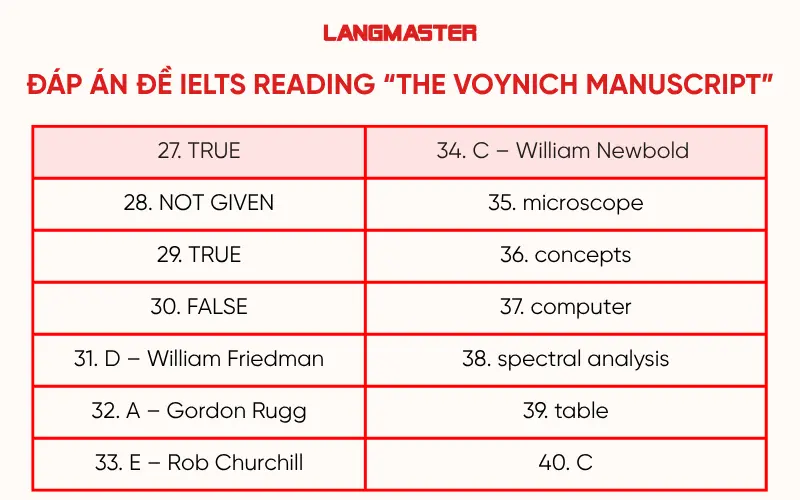
Dưới đây là bảng đáp án để đối chiếu:
|
27. TRUE |
34. C – William Newbold |
|
28. NOT GIVEN |
35. microscope |
|
29. TRUE |
36. concepts |
|
30. FALSE |
37. computer |
|
31. D – William Friedman |
38. spectral analysis |
|
32. A – Gordon Rugg |
39. table |
|
33. E – Rob Churchill |
40. C |
Đáp án chi tiết 28-30:
27. It is uncertain when the Voynich manuscript was written. → TRUE
“...containing 240-odd pages of drawings and text of unknown age and authorship.”
→ Cụm “unknown age” cho thấy không rõ thời điểm bản thảo được viết → Đáp án: TRUE
28. Wilfrid Voynich donated the manuscript to the Beinecke Library. → NOT GIVEN
Bài chỉ nói: “...after the American book dealer Wilfrid Voynich, who bought the manuscript from a Jesuit college in Italy in 1912.”
→ Không có thông tin ông tặng hoặc quyên góp bản thảo cho thư viện Beinecke → Đáp án: NOT GIVEN
29. Interest in the Voynich manuscript extends beyond that of academics and professional code breakers. → TRUE
“...has attracted the attention of everyone from amateur dabblers to top codebreakers, all determined to succeed...”
→ Không chỉ các học giả và chuyên gia mà cả người nghiệp dư cũng quan tâm → Đáp án: TRUE
30. The text of the Voynich manuscript contains just under 70 symbols. → FALSE
“...it’s possible to make out more than 70 distinct symbols among the 170,000-character text.”
→ Có hơn 70 ký tự, chứ không phải ít hơn 70 → Đáp án: FALSE
Đáp án chi tiết 31-34
31. The number of times some words occur make it unlikely that the manuscript is based on an authentic language. → D. William Friedman
“...Friedman discovered that some words and phrases appeared more often than expected... casting doubt on claims that the manuscript concealed a real language.”
→ Friedman nhận thấy tần suất từ không tự nhiên như ngôn ngữ thật → Đáp án: D
32. Unlike some other similar objects of fascination, people can gain direct access to the Voynich manuscript. → A. Gordon Rugg
“‘Most other mysteries involve second-hand reports,’ says Dr Gordon Rugg... ‘But this is one that you can see for yourself.’”
→ Rugg nhấn mạnh người ta có thể trực tiếp xem bản thảo chứ không chỉ nghe kể lại → Đáp án: A
33. The person who wrote the manuscript may not have been entirely sane. → E. Rob Churchill
“Others, such as Churchill, have suggested that... the author... had lost touch with reality.”
→ Churchill cho rằng tác giả có thể không hoàn toàn tỉnh táo → Đáp án: E
34. It is likely that the author of the manuscript is the same person as suggested by Wilfrid Voynich. → C. William Newbold
“In 1921 Voynich’s view that Bacon was the writer appeared to win support from the work of William Newbold...”
→ Newbold ủng hộ quan điểm của Voynich rằng Roger Bacon là tác giả → Đáp án: C
Đáp án chi tiết 35-39
35. William Newbold believed that the author of the Voynich manuscript had been able to look at cells through a … → microscope
“According to Newbold, the manuscript proved that Bacon had access to a microscope centuries before they were supposedly first invented.”
→ Newbold tin rằng Bacon đã quan sát tế bào qua kính hiển vi → Đáp án: microscope
36. William Friedman concluded that the manuscript was written in an artificial language that was based on … → concepts
“Friedman concluded that... ‘Voynichese’ is... an artificial language, whose words are devised from concepts, rather than linguistics.”
→ Ngôn ngữ này dựa trên các khái niệm chứ không phải quy tắc ngôn ngữ → Đáp án: concepts
37. He couldn’t find out the meaning of this language but he believed that the … would continue to bring advances in code breaking. → computer
“He suspected that major insights would come from... the computer, which had already transformed codebreaking.”
→ Friedman tin rằng máy tính sẽ mang lại tiến bộ trong việc giải mã → Đáp án: computer
38. Dr Gabriel Landini used a system known as … in his research. → spectral analysis
“...published the results of his study... using a pattern-detecting method called spectral analysis.”
→ Landini áp dụng phương pháp phân tích phổ để nghiên cứu bản thảo → Đáp án: spectral analysis
39. Dr Gordon Rugg’s system involved a grille that made it possible to quickly select symbols that appeared in a … → table
“...a specially constructed grille is used to pick out symbols from a table...”
→ Hệ thống của Rugg chọn ký hiệu từ một bảng ký tự → Đáp án: table
Đáp án chi tiết 40
40. The writer’s main aim in this passage is to … → C. describe the numerous attempts to decode the manuscript
Toàn bài lần lượt mô tả nỗ lực của nhiều học giả (Voynich, Newbold, Friedman, Landini, Rugg...) qua các thời kỳ.
→ Mục đích chính là tường thuật quá trình nhiều người cố gắng giải mã bản thảo → Đáp án: C
>>> XEM THÊM:
Khi bước vào hành trình giải đề IELTS Reading, việc xây dựng vốn từ vựng theo một lộ trình khoa học là yếu tố then chốt để cải thiện band điểm. Bài viết này mang đến danh sách từ vựng IELTS Reading quan trọng trong bài “The Voynich Manuscript” giúp bạn tăng tốc độ đọc hiểu, nâng cao khả năng phân tích thông tin và từng bước đạt kết quả tốt hơn ở kỳ thi chính thức.
|
Từ / Cụm từ |
Nghĩa tiếng Việt |
Ví dụ trong bài |
|
starkly modern |
hiện đại một cách rõ nét / nổi bật |
“The starkly modern Beinecke Library at Yale University is home to some of the most valuable books in the world.” |
|
vellum manuscript |
bản thảo viết trên da thuộc (giấy da bê) |
“...an unprepossessing vellum manuscript about the size of a hardback book...” |
|
unprepossessing |
trông không có gì đặc biệt / không nổi bật |
“...an unprepossessing vellum manuscript about the size of a hardback book...” |
|
esoteric knowledge |
kiến thức huyền bí / khó hiểu, chỉ dành cho số ít người |
“...the drawings hint at esoteric knowledge, while the text seems to be some sort of code.” |
|
codebreaker |
chuyên gia giải mã / phá mã |
“...from amateur dabblers to top codebreakers, all determined to succeed...” |
|
second-hand reports |
thông tin gián tiếp / qua người khác |
“‘Most other mysteries involve second-hand reports, but this is one that you can see for yourself.’” |
|
cipher system |
hệ thống mã hóa |
“...who claimed to have found the key to the cipher system used by Bacon.” |
|
wishful thinking |
ảo tưởng, suy nghĩ thiếu thực tế |
“It soon became clear, however, that Newbold had fallen victim to wishful thinking.” |
|
to defy the efforts of |
thách thức mọi nỗ lực của (ai đó) |
“The Voynich manuscript has continued to defy the efforts of world-class experts.” |
|
renowned |
nổi tiếng, danh tiếng |
“...led by William Friedman, the renowned American codebreaker.” |
|
casting doubt on |
làm dấy lên nghi ngờ về |
“...casting doubt on claims that the manuscript concealed a real language...” |
|
artificial language |
ngôn ngữ nhân tạo |
“...‘Voynichese’ is some sort of specially created artificial language...” |
|
cryptanalytical expertise |
chuyên môn về phân tích mật mã |
“...because of the lifetime of cryptanalytical expertise he brought to bear.” |
|
spectral analysis |
phương pháp phân tích phổ (dùng để phát hiện mẫu hoặc cấu trúc dữ liệu) |
“...using a pattern-detecting method called spectral analysis.” |
|
entropy |
độ hỗn loạn / mức độ ngẫu nhiên (trong lý thuyết thông tin) |
“...the entropy of the text was consistent with language had been used.” |
|
hoax |
trò lừa bịp / giả mạo |
“Many are convinced that the Voynich manuscript isn’t a hoax.” |
|
grille |
tấm lưới / khung chọn ký tự (trong phương pháp mã hóa) |
“...a specially constructed grille is used to pick out symbols from a table.” |
|
feasible |
khả thi, có thể thực hiện được |
“...he hadn’t set out to prove the manuscript a hoax. ‘I simply demonstrated that it’s feasible to hoax something this complex.’” |
|
lost touch with reality |
mất liên hệ với thực tế (ẩn dụ: bị điên / hoang tưởng) |
“...hint at an author who had lost touch with reality.” |
|
derive pleasure from |
cảm thấy thích thú từ việc gì đó |
“‘Many derive great intellectual pleasure from solving puzzles, says Rugg.’” |
>>> XEM THÊM:
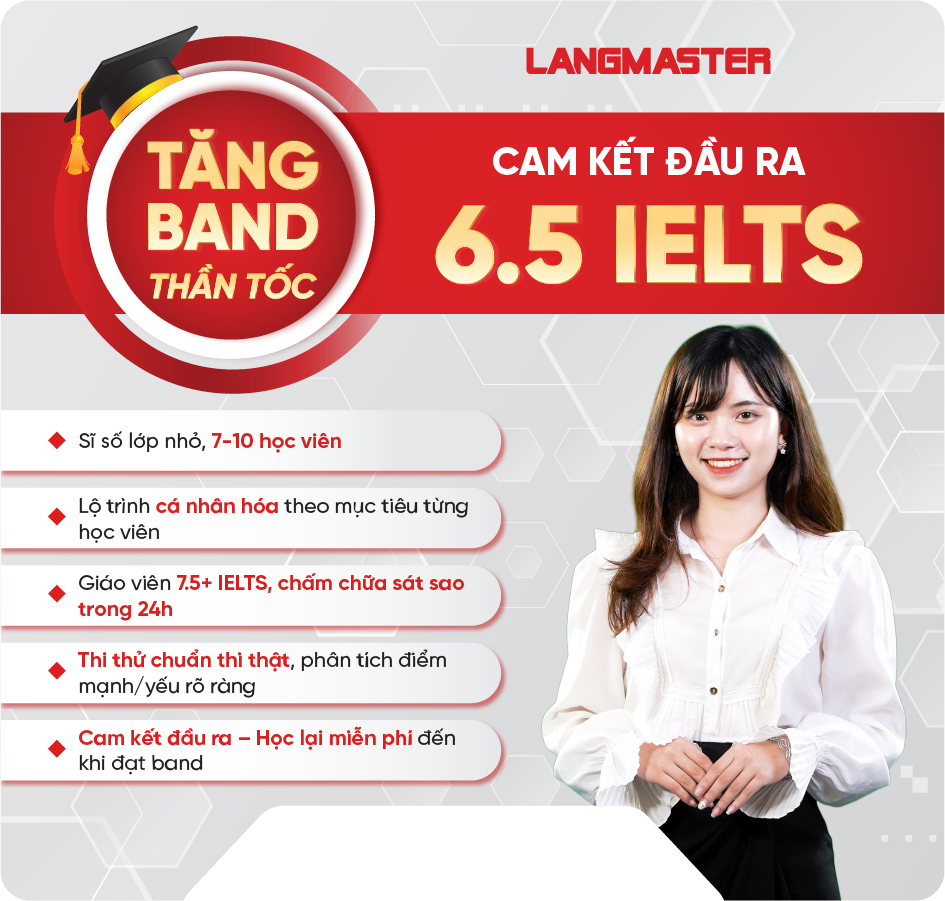
Khi luyện đề IELTS Reading “The Voynich Manuscript”, nhiều học viên thường gặp khó khăn trong việc xác định dạng câu hỏi và áp dụng từ vựng học thuật một cách chính xác. Để đạt hiệu quả cao, cần có một kế hoạch ôn tập logic, kết hợp với chiến lược làm bài rõ ràng và sự hỗ trợ từ giáo viên nhiều kinh nghiệm. Để đáp ứng nhu cầu, Langmaster xây dựng các khóa học IELTS online với lộ trình cá nhân hóa. Học viên sẽ được giảng viên theo sát, chỉ ra lỗi sai ngay lập tức trong vòng 24 giờ và hướng dẫn phương pháp học tập tối ưu để tiến bộ nhanh chóng hơn.

Tại Langmaster học viên được:
Coaching 1 - 1 với chuyên gia: Học viên được kèm riêng để khắc phục điểm yếu, phân bổ thời gian thi chi tiết, tập trung rèn kỹ năng chưa vững và rút ngắn lộ trình nâng band.
Giáo viên 7.5+ IELTS: Chấm chữa bài trong 24 giờ, giúp bạn cải thiện nhanh chóng và rõ rệt.
Sĩ số lớp nhỏ, 7 - 10 học viên: Giáo viên theo sát từng bạn, nhiều cơ hội trao đổi và nhận phản hồi chi tiết.
Lộ trình học cá nhân hóa: Thiết kế dựa trên trình độ đầu vào và mục tiêu điểm số, kèm báo cáo tiến bộ hàng tháng.
Thi thử định kỳ: Mô phỏng áp lực thi thật, phân tích điểm mạnh - yếu để điều chỉnh chiến lược học.
Cam kết đầu ra, học lại miễn phí: Đảm bảo kết quả, giảm thiểu rủi ro “học xong vẫn chưa đạt mục tiêu”.
Học online chất lượng như offline: Có bản ghi để xem lại, linh hoạt, tiết kiệm thời gian, chi phí.
Hệ sinh thái học tập toàn diện: Tài liệu chuẩn, bài tập online, cộng đồng học viên và cố vấn luôn đồng hành.
Đăng ký học thử IELTS Online miễn phí ngay hôm nay để trải nghiệm lớp học thực tế, kiểm tra trình độ và nhận lộ trình học tập hiệu quả, giúp bạn thành thạo kỹ năng IELTS Reading và chinh phục mục tiêu IELTS!
Việc ôn luyện bài đọc “The Voynich Manuscript” không chỉ giúp người học củng cố kiến thức mà còn rèn luyện tư duy phản xạ ngôn ngữ một cách tự nhiên. Khi kết hợp kỹ năng đọc hiểu với chiến lược làm bài hiệu quả, bạn sẽ tự tin chinh phục phần Reading trong kỳ thi IELTS và đạt được band điểm mong muốn. Hãy duy trì thói quen luyện tập hằng ngày để cải thiện tốc độ đọc, khả năng suy luận và mở rộng vốn từ học thuật của mình.
Các dạng bài phổ biến và tiêu chí chấm điểm IELTS Reading chi tiết nhất: Multiple Choice, Matching Information, Matching Headings,... và hướng dẫn chiến lược làm bài hiệu quả
Những sai lầm khi luyện IELTS Reading bao gồm: dịch từng từ, đọc hết cả bài, không đọc câu hỏi trước, không quản lý thời gian, không nắm vững kỹ năng paraphrase, viết sai chính tả
![Giải đề IELTS Reading: A brief history of humans and food [full answers]](https://langmaster.edu.vn/storage/images/2025/09/20/a-brief-history-of-humans-and-food-ielts-reading-answers.webp)
Giải đề thi IELTS Reading “A brief history of humans and food” kèm full đề thi thật, câu hỏi, đáp án, giải thích chi tiết, và từ vựng cần lưu ý khi làm bài.
Tổng hợp IELTS Reading tips hay nhất giúp bạn đọc nhanh, nắm ý chính và xử lý thông tin chính xác, tự tin đạt điểm cao trong kỳ thi IELTS.
![Giải đề IELTS Reading: The importance of law [Full answers]](https://langmaster.edu.vn/storage/images/2025/09/22/55.webp)
Giải đề IELTS Reading “The importance of law” kèm đáp án chi tiết, từ vựng quan trọng và bí quyết luyện thi hiệu quả để nâng cao band điểm.


Hơn 16 năm kinh nghiệm, đào tạo thành công 800.000+ học viên
Phương pháp giảng dạy hiện đại, học viên tiến bộ rõ rệt
Lộ trình học chuẩn quốc tế, phù hợp với nhu cầu thực tiễn
Giáo viên đạt chuẩn Quốc tế với chất lượng top đầu thị trường, giàu kinh nghiệm
Học online linh hoạt, cam kết đầu ra bằng văn bản

![Giải đề thi IELTS Reading: Listening to the Ocean [Full Answer]](https://langmaster.edu.vn/storage/uploads/original/2025/10/13/listening-to-the-ocean-ielts-reading-2.png)
.png)